

IN THIS ARTICLE
- How Coconut Grove and Coral Gables compare in lifestyle, location, and neighborhood character
- What current market data says about pricing, inventory, and buyer leverage
- How homes, architecture, waterfront access, and luxury real estate differ
- Which neighborhood may be the better fit for different Miami buyers in 2027
MARKET SNAPSHOT: COCONUT GROVE VS. CORAL GABLES
Coconut Grove and Coral Gables remain two of Miami’s most desirable residential markets, but current conditions show meaningful differences for buyers heading into 2027.
The difference in median prices is important, but it does not mean Coconut Grove is universally more expensive. Coral Gables contains a broader range of housing, from condos and historic homes to multimillion-dollar estates in some of Miami’s most exclusive enclaves. Coconut Grove also combines single-family properties with a significant high-end condominium market.
For buyers, the better comparison is usually property type, lot size, condition, waterfront status, architecture, and micro-neighborhood—not the citywide or neighborhood-wide median alone.
COCONUT GROVE VS. CORAL GABLES: LIFESTYLE AND NEIGHBORHOOD CHARACTER
Coconut Grove and Coral Gables sit next to one another, but they offer noticeably different versions of Miami living. The Coconut Grove neighborhood guide reflects a community built around tropical landscaping, parks, marinas, restaurants, historic homes, and a walkable village atmosphere. The Coral Gables neighborhood guide presents a more planned environment defined by Mediterranean architecture, established residential streets, historic landmarks, golf, shopping, and a larger traditional downtown.
Coconut Grove generally feels more organic, eclectic, and waterfront-oriented. Coral Gables feels more formal, architecturally consistent, and residential. That distinction is also why Coconut Grove often appears among OPES’s best urban neighborhoods in Miami, while Coral Gables is frequently included among the best suburban neighborhoods in Miami.


COCONUT GROVE MAY BE A BETTER FIT FOR BUYERS WHO WANT:
- Walkability around a village-style commercial district
- Easy access to Biscayne Bay, marinas, and waterfront recreation
- Mature tropical landscaping and a dense tree canopy
- Restaurants, parks, and shops close to residential areas
- A mix of historic cottages, contemporary homes, and luxury condos
- A relaxed environment with more architectural variety
- Strong access to Brickell and central Miami
CORAL GABLES MAY BE A BETTER FIT FOR BUYERS WHO WANT:
- Larger established residential districts
- Mediterranean and Old Spanish architectural character
- More consistent streetscapes and community planning
- Golf courses, historic landmarks, parks, and cultural amenities
- Miracle Mile and a larger traditional commercial center
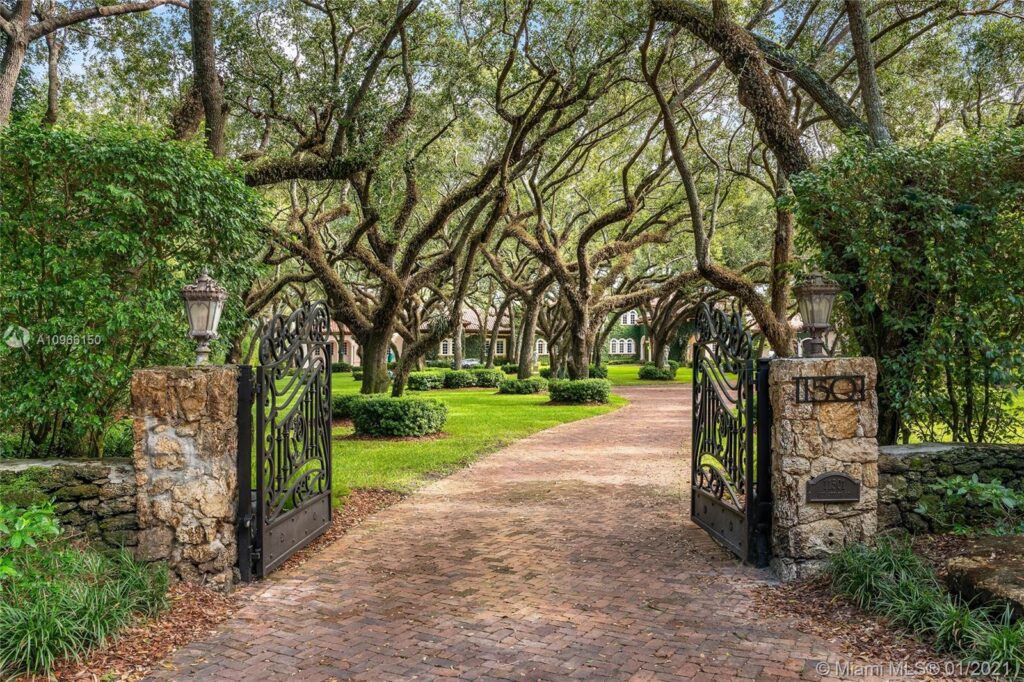
- Gated, waterfront, and estate-home options
- A community with a strong municipal identity
Both neighborhoods are also important choices for buyers using OPES’s Miami relocation neighborhood guide or comparing the best neighborhoods for families in Miami. The deciding factor is less about which neighborhood ranks higher and more about which daily lifestyle feels right.
FREQUENTLY ASKED QUESTIONS
1. Is Coconut Grove more walkable than Coral Gables?
Both have walkable areas, but Coconut Grove concentrates restaurants, shops, parks, and waterfront amenities around a more compact village center. Coral Gables has a larger downtown, while many residential neighborhoods extend farther from it.
2. Which neighborhood feels more residential?
Coral Gables generally offers a greater variety of quiet traditional residential areas because it covers a much larger geographic area.
3. Which neighborhood feels more tropical?
Coconut Grove. Its mature tree canopy, vegetation, irregular streets, parks, and proximity to Biscayne Bay create a more visibly tropical environment.
4. Which neighborhood feels more traditional?
Coral Gables. Its planned boulevards, historic architecture, landscaping, and Mediterranean identity create a more formal and traditional sense of place.
HOW COCONUT GROVE AND CORAL GABLES REAL ESTATE COMPARE
Both communities contain multimillion-dollar homes, historic properties, new construction, waterfront estates, and some of Miami’s most valuable residential real estate. However, the housing experience differs significantly.
OPES has examined the financial side of the comparison in its guide to investing in Coral Gables vs. Coconut Grove. For owner-occupants, though, the decision often revolves more around architecture, lot size, privacy, walkability, renovation needs, and proximity to the water.
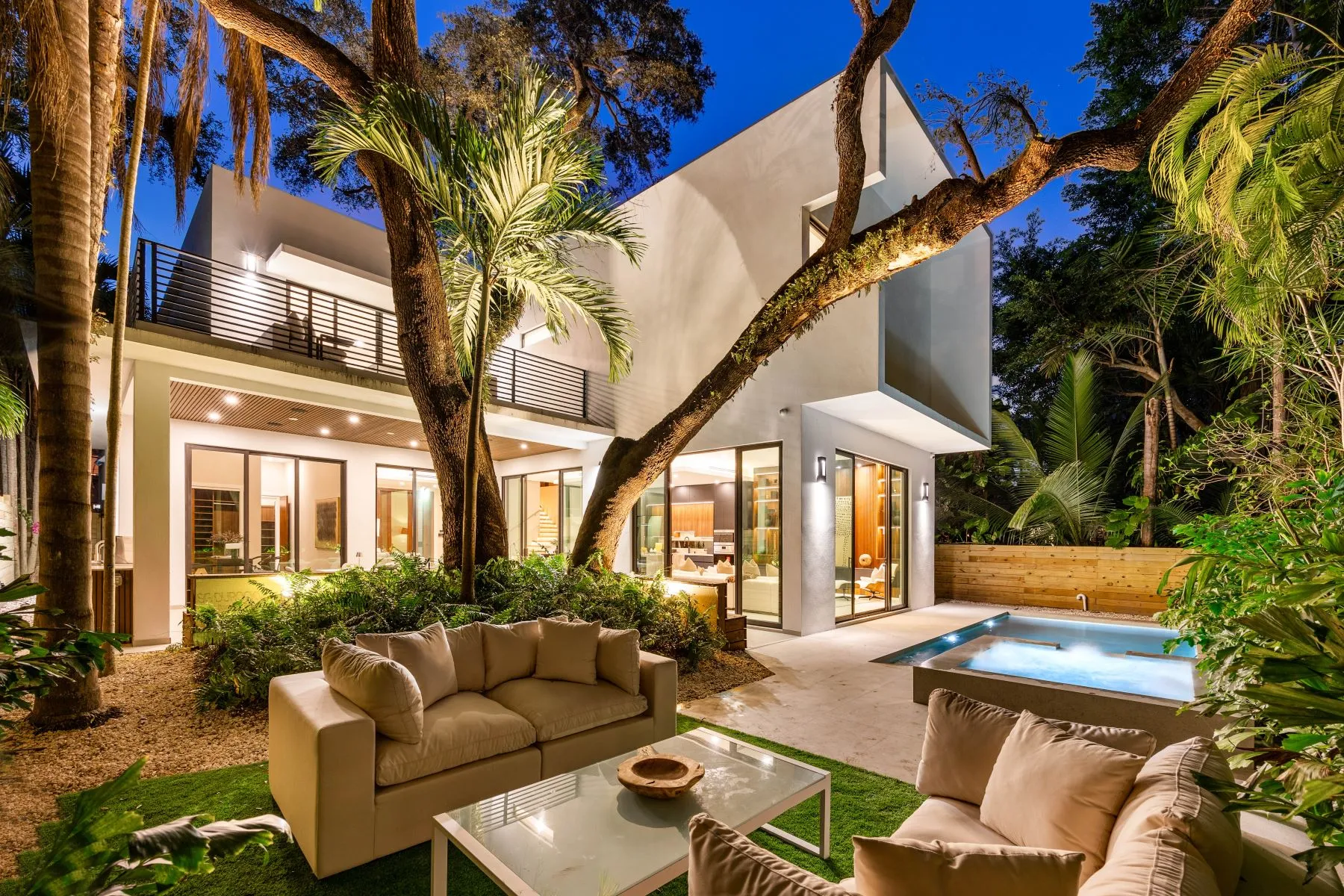
COCONUT GROVE BUYERS MAY FIND:
- Historic cottages and character homes
- Renovated older residences
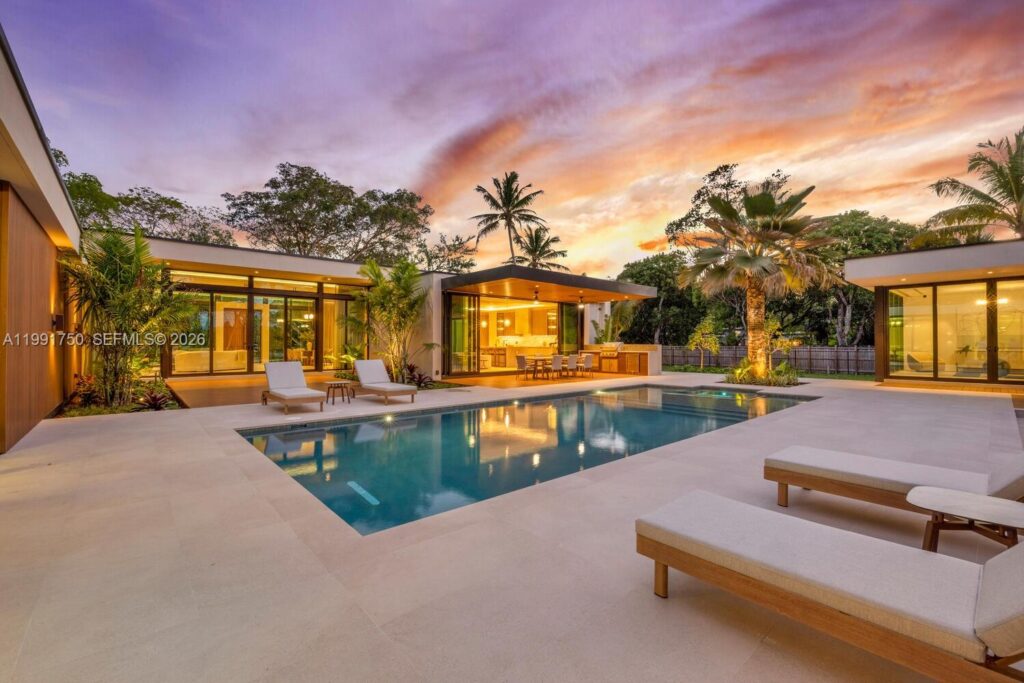
- Contemporary luxury houses
- High-end new construction
- Townhouses and boutique developments
- Major luxury condominium projects
- Gated residential pockets
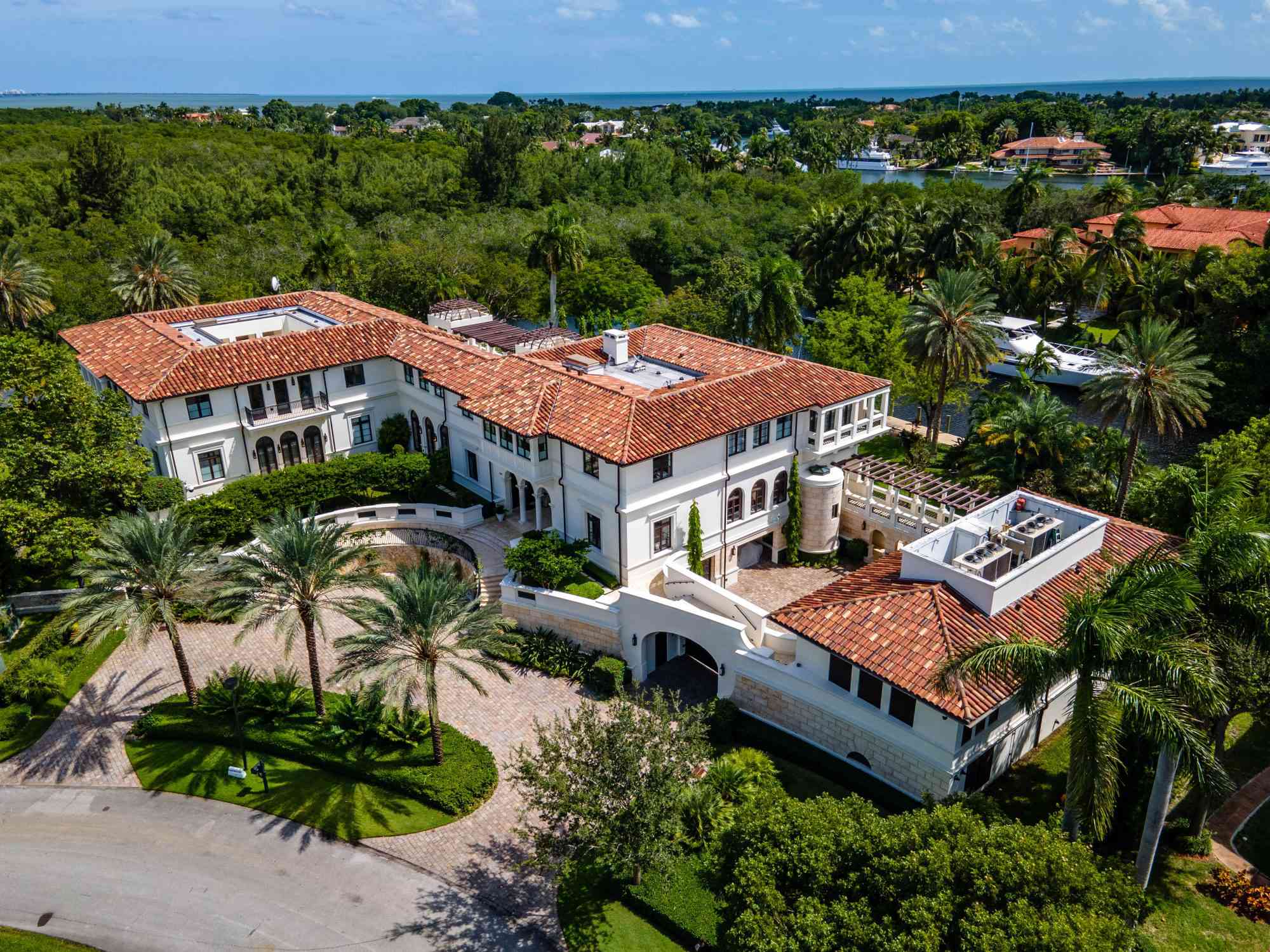
- Bayfront estates
The Grove has become particularly important for contemporary development and appears among OPES’s best Miami neighborhoods for new-construction homes. Scarcity of desirable land, proximity to Biscayne Bay, and demand for modern indoor-outdoor living continue to shape the market.
CORAL GABLES BUYERS MAY FIND:
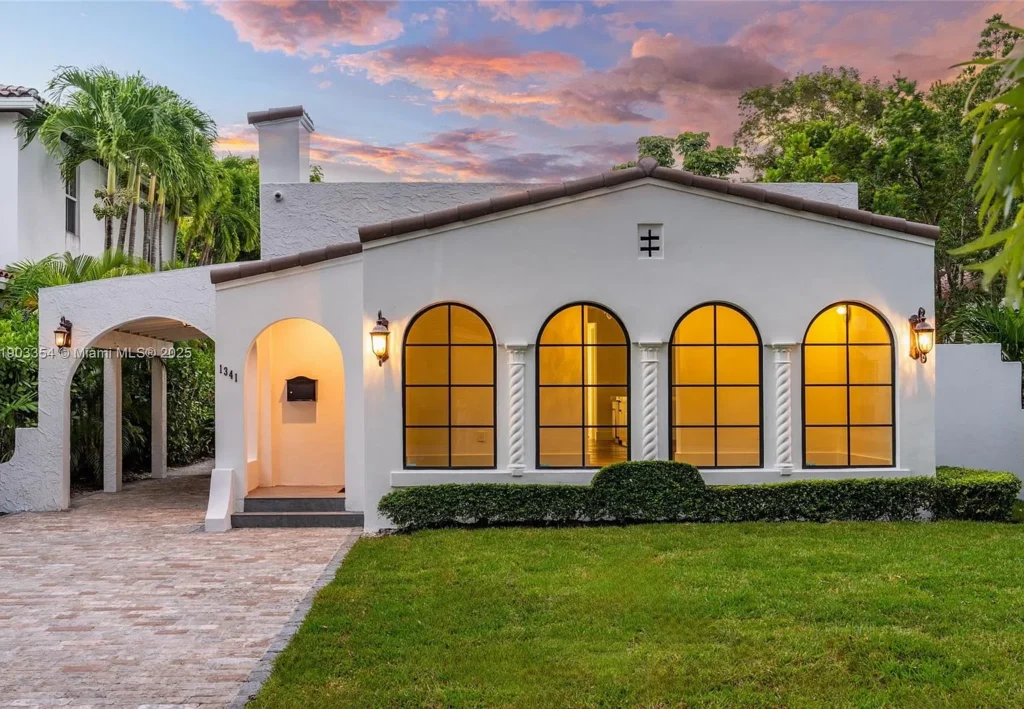
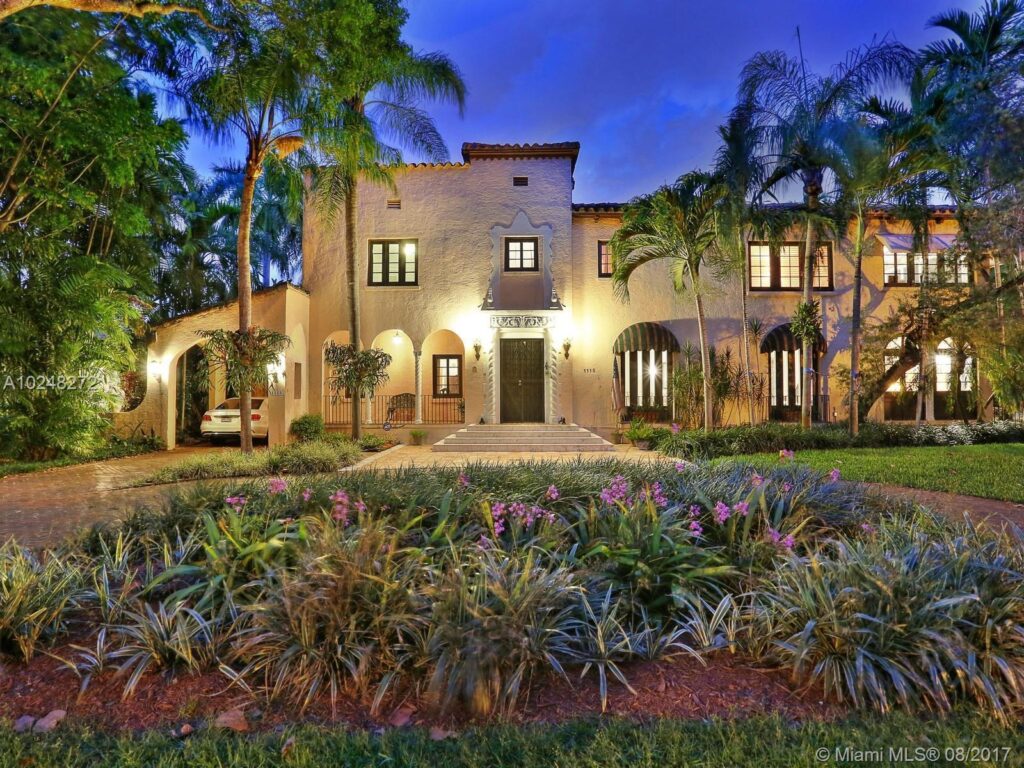
- Old Spanish homes
- Mediterranean Revival residences
- Mid-century houses
- Renovated historic properties
- Contemporary new construction
- Golf-course properties
- Canalfront and bayfront homes
- Gated communities
- Large luxury estates
Architecture and long-term neighborhood stability play particularly important roles in Coral Gables. The Opes Group guide to investing in Coral Gables real estate examines how limited land supply, historic character, zoning, and neighborhood prestige influence that market.
At the highest price points, Coral Gables also includes enclaves represented in The Opes Group’s guide to Miami’s most exclusive gated communities. Both Coconut Grove and Coral Gables also appear in the broader conversation around the wealthiest neighborhoods in Miami-Dade and Miami’s strongest luxury real estate markets.
The key lesson is that buyers should not rely too heavily on neighborhood-wide median prices. A $3 million, $5 million, or $10 million budget can produce very different homes and lifestyles depending on the street, lot, architecture, condition, and waterfront access.
FREQUENTLY ASKED QUESTIONS
1. . Which neighborhood is more expensive?
September 2026 statistics show a higher median listing price in Coconut Grove, but the housing inventories are not directly comparable. Coral Gables contains ultra-luxury submarkets where prices substantially exceed the citywide median.
2. Where will buyers find more historic homes?
Both communities have important historic housing stock, but Coral Gables has a particularly strong concentration of Mediterranean Revival and Old Spanish architecture.
3. Which neighborhood is better for new construction?
Both offer substantial high-end new construction. Coconut Grove has experienced significant contemporary redevelopment, while Coral Gables combines modern construction with stronger historic and architectural continuity.
4. Which neighborhood is better for waterfront homes?
It depends on the buyer. Coconut Grove is especially strong for buyers who want boating, marinas, and Biscayne Bay integrated into everyday life. Coral Gables may be preferable for buyers seeking private canalfront or bayfront estates.
WHICH NEIGHBORHOOD IS RIGHT FOR YOU IN 2027?
For most buyers, the easiest way to choose between Coconut Grove and Coral Gables is to define the lifestyle first and the property second. Someone who wants boating, walkability, restaurants, parks, and an informal tropical atmosphere may naturally prefer Coconut Grove. A buyer seeking architectural consistency, larger residential districts, historic character, or private estate living may lean toward Coral Gables.
Coconut Grove is especially compelling for outdoor-oriented buyers, which helps explain its place among Miami’s best neighborhoods for an outdoor lifestyle. Coral Gables becomes particularly compelling for buyers whose definition of luxury centers on land, privacy, historic prestige, gated communities, or waterfront estates.
Buyers should also remember that Miami’s market is changing. OPES continues to track where Miami real estate prices are rising, evolving Miami buyer migration trends, and where families are moving in Miami. Those shifts matter because neighborhoods that look similar geographically can attract very different buyers.


COCONUT GROVE MAY BE RIGHT FOR YOU IF:
- You want to walk to restaurants and neighborhood amenities.
- Sailing, boating, or Biscayne Bay are part of your lifestyle.
- You prefer tropical surroundings and architectural variety.
- You want proximity to Brickell without living in a high-rise district.
- You like contemporary homes, historic cottages, or luxury condos.
- You prefer a neighborhood that feels less formal.
CORAL GABLES MAY BE RIGHT FOR YOU IF:
- You prefer traditional residential streets and established neighborhoods.
- Historic Spanish or Mediterranean architecture appeals to you.
- You want more choices among golf, waterfront, gated, and estate properties.
- Architectural consistency matters.
- You want a larger municipality with its own downtown and amenities.
- Privacy and estate-style living are priorities.
BOTH SHOULD BE CONSIDERED IF:
- You are relocating to Miami and are not yet committed to a neighborhood.
- Your budget allows you to compare several luxury property types.
- Schools, commute, and long-term resale value matter.
- You are deciding between an older renovated home and new construction.
- You want strong access to central Miami while maintaining a residential lifestyle.
FREQUENTLY ASKED QUESTIONS
1. Is Coconut Grove better for younger buyers?
Not necessarily. Its restaurants, walkability, waterfront environment, and less formal atmosphere may appeal to younger buyers, but Coconut Grove also contains major family homes and ultra-luxury residences.
2. Is Coral Gables better for families?
Coral Gables attracts many family buyers because of its established residential neighborhoods and broad range of housing. Coconut Grove is also highly attractive to families who prioritize parks, walkability, schools, and outdoor living.
3. Which neighborhood is more convenient to Brickell?
Coconut Grove generally sits closer to Brickell, particularly from the northern portion of the neighborhood. Actual travel time depends heavily on the exact property and traffic.
4. Should buyers search both neighborhoods at the same time?
Yes. Buyers who have not already chosen a lifestyle should usually compare both. Similar budgets can produce significantly different homes, lot sizes, architecture, and neighborhood experiences.
WORK WITH THE OPES GROUP TO COMPARE COCONUT GROVE AND CORAL GABLES
The Opes Group helps Miami buyers evaluate those differences at the property and micro-neighborhood level. Clients can work with the Opes Group agent team while benefiting from a broader team structure built around market intelligence, negotiation, marketing, and transaction support.
The story behind The Opes Group Miami real estate team explains how that collaborative model works. The team is led by Miami luxury Realtor Joanna Jimenez, whose background and approach are explored further in the Joanna Jimenez leadership profile.
Buyers deciding what type of representation they need can also review OPES’s comparison of a Miami real estate team versus an individual agent and its guide to the best Miami Realtors in 2026.
The Opes Group can help buyers compare:
- Coconut Grove and Coral Gables micro-neighborhoods
- Current listings and recent comparable sales
- Historic homes versus contemporary construction
- Waterfront and non-waterfront properties
- Lot size, condition, and renovation potential
- Gated and estate-home options
- Schools, commute, and lifestyle priorities
- On-market and privately marketed opportunities
- Offer strategy, inspections, negotiation, and closing

EXPLORE MORE
MIAMI NEIGHBORHOODS




SELL YOUR HOME WITH THE OPES GROUP
BUY WITH THE OPES GROUP
Buying with The Opes Group means having a team of experts guiding you from the first consultation to closing day. Clients benefit from hyper-local market insights, strategic recommendations, and access to both on-market and off-market opportunities. With trusted vendors and a dedicated transaction team, buyers enjoy a smooth, stress-free process all the way to the celebration of their new home.